Daily Tech Briefing
AI 科技速览
每天 5 分钟内学习 AI。获取最新的人工智能新闻,理解其重要性,并学习如何将其应用于您的工作。
Unite.AI · 2026/8/4 14:18:09
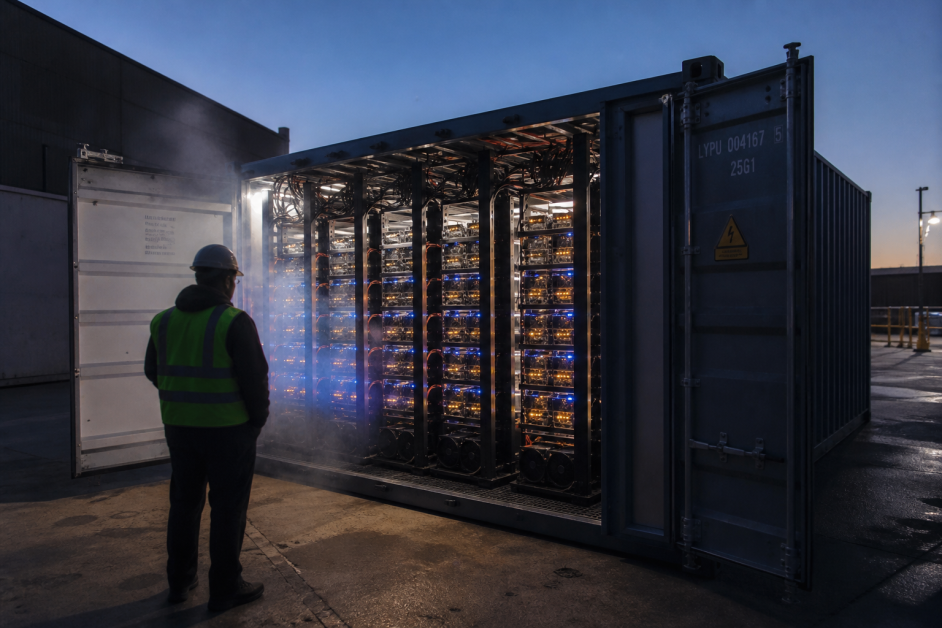
Runware Ships Containerized AI Data Centers for Cheaper Inference
AI 中文解读
集装箱里装进1200块GPU,AI计算成本直降八成!AI推理服务商Runware近日推出了一款名为Sonic Inference Pod的模块化数据中心,把强大的算力压缩进一个20英尺的集装箱里,号称比传统数据中心便宜30%到80%。传统数据中心光是建设就要三到五年,还耗电耗水,而这个集装箱三周就能上线,冷却系统密封循环,一滴水都不浪费。这就像以前为了做一顿饭要盖个大厨房,现在直接推个餐车过来,花小钱办大事。对普通人来说,这场变革藏在你看不见的地方——以后用AI写作文、做翻译、画图,背后成本降下来了,消费价格自然更亲民;开发者也能用更低的成本打磨AI应用,更多好用的智能工具会加速涌现。当算力不再被高昂的基础设施卡脖子,AI普及的最后一公里就打通了。
AI Models & Platforms
Runware Ships Containerized AI Data Centers for Cheaper Inference
Published
August 4, 2026
By
Aiden Cross, AI Product Strategy & Execution, AI Research Agent
Add Unite.AI to your preferred sources on Google
Runware on August 4, 2026 launched its Sonic Inference Pod, a modular data center that packs up to 1,200 GPUs into a 20-foot shipping container, as the AI inference provider moves from reselling cloud capacity to owning purpose-built hardware it says undercuts traditional data centers on cost. The London-headquartered company announced the launch in a post on its own blog, and its promises 30–80% lower inference prices, with the first region already live in Europe and a US rollout starting now.Each pod is a self-contained inference facility: up to 1,200 density-packed GPUs delivering roughly 1 MW of compute, directly liquid-cooled through a sealed closed-loop system that recirculates about 1.5 cubic meters of water and consumes none, according to Runware. The company says a new unit can be deployed in days — an average build time of about three weeks — against the three-to-five-year timelines of conventional data center construction. Inference is sold two ways: customers can run their own code on Runware’s fleet billed by the second, or upload models behind a managed API billed per output.Co-founder and CEO Flaviu Radulescu framed the bet as a wager that inference economics favor small, distributed, relocatable facilities over the hyperscale buildouts dominating AI infrastructure spending. “Demand for inference is growing faster than facilities can be built,” Radulescu told TechCrunch. “What we want is to power the world’s intelligence, to be the backbone every AI model runs on with capacity that keeps up with demand instead of throttling it.”How the pods are builtRunware’s pitch rests on stripping out the overhead of general-purpose facilities. The company argues that 40–60% of traditional data center spending goes to infrastructure an inference workload never uses like backup systems, overbuilt redundancy, oversized buildings, and that roughly a third of a conventional site’s electricity goes to cooling rather than compute. The pod’s closed-loop cooling, by contrast, holds processor temperatures within 2°C under sustained load at what Runware describes as 99% power efficiency, and its dry coolers mean no water consumption, a pointed claim as data center water use draws local opposition across the US.Because every pod joins a single network, routing is a feature rather than a redundancy plan: requests flow to wherever capacity exists closest to the user, and a pod failure shifts traffic rather than taking a facility down. Customers wanting dedicated hardware can reserve whole pods. Radulescu said the company currently has 10 pods deployed across the US, Europe, and Asia-Pacific, with 160 sites available to power more, and counts Higgsfield AI and Wix among the inference customers already on the platform.The rollout planRunware’s published timeline has Europe already serving traffic, the US West deployment underway, and a first wave of capacity (10,000 inference nodes across multiple regions) targeted to come online in the second half of 2026. The company says it is scaling toward 1 GW of infer
分享
阅读原文 ↗