Daily Tech Briefing
AI 科技速览
每天 5 分钟内学习 AI。获取最新的人工智能新闻,理解其重要性,并学习如何将其应用于您的工作。
VentureBeat ML · 2026/8/3 23:14:48
Asana's AI agents share memory across your company — but not your secrets
AI 中文解读
Asana发布了一个叫AWM的新系统,核心亮点是:企业AI终于长出了“长期记忆”,能像老同事一样跨部门协作,但机密信息绝不会串到不该看的人那里。通俗点说,以前AI聊天机器人每次回答都“失忆”,问完就忘;现在Asana把公司18年的工作数据织成一张“企业大脑”网,AI不仅能记住前几个人问过什么,还能看懂项目目标、主动更新进度,就像一个真正参与了团队工作的搭档。但为了不让高管秘密项目的对话被普通员工无意中看到,系统特意设置了权限隔离——AI共享的是公共记忆,内部敏感信息严格上锁。这套系统已经在联邦快递等公司落地了。对普通人来说,最直接的影响就是以后企业协作会更顺畅:项目延误时AI会主动提醒连锁影响,跨部门对接不用反复解释背景,快递物流的进度追踪也可能更透明精准。说白了,AI正在从“你问一句它答一句”的工具,变成“懂规矩、记性好、嘴也严”的数字同事。
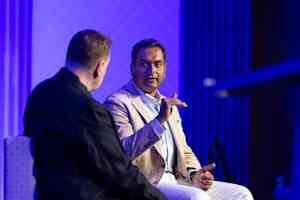
Enterprise teams building AI agents keep hitting the same wall: a chatbot that can answer a prompt but can't remember what the last five people asked it, and can't tell you whether last month's version actually worked.In a fireside chat with VentureBeat's Sam Witteveen at VB Transform 2026, Asana's chief product officer, Arnab Bose, unpacked how his team tackled this problem to build a new operating system: Agentic Work Management (AWM). The product treats AI agents as coachable teammates that operate alongside humans rather than as one-to-one assistants.For product builders and developers trying to move beyond basic integrations, Bose provided a look under the hood. He detailed how Asana engineered AWM, offering a blueprint for solving real-world bottlenecks and building agentic systems at scale.The Work Graph: 18 years of company data, repurposedTo build an operating system for human-agent teams, Asana needed a ready-made enterprise context graph. They built AWM on top of their 18-year-old architecture: the Work Graph. This graph-based database organizes information through a structure the company calls the Pyramid of Clarity. The smallest unit of work is a task with an assignee and a due date. Tasks belong to projects, projects roll up into portfolios, and portfolios connect to company-wide goals. The graph can help trace for example how a delayed design task impacts a corporate revenue goal. The Work Graph provides a real-time ledger of who does what, by when, and why. AWM leverages this architecture to create a multiplayer teammate. A standard AI copilot is stateless and tied to a single user's prompt. Because AWM plugs into the Work Graph, the AI can view overarching company goals, update project statuses, and share memory with human colleagues. "Because [the agent] is plugged into the Work Graph, it's not just looking at a particular prompt that you're sending it or looking at a particular individual's markdown file system on their local file,” Bose said. “It's working off of that shared ledger for the whole company."AWM is already in production. Bose said Asana has "several customers live and successful on it," including FedEx, which published its own case study on the shift.Building in guardrails for confidential workShipping AWM to enterprise customers required Asana to solve several technical hurdles. The first was data governance. If an AI teammate acts across a company, it builds a shared memory by learning from workflows and human feedback. Bose highlighted a critical boundary problem: If an executive uses AWM to build workflows for a confidential project, the system must ensure the agent's updated memory does not leak context to an unauthorized employee who interacts with the same agent later. "[I] shouldn't be able to leverage that shared memory when I run the AI teammate if you created that memory using that same teammate on a project that is, let's say, a secret M&A project that I don't have access to," Bose said. Asana engineered a system of access controls to govern what triggers the creation of a memory versus the simple execution of a task.Second, AWM handles dynamic model routing to abstract prompt engineering away from the user. When a user assigns a task to an AI teammate (i.e., drafting a job description for a general manager role), the AI cross-references public job postings, Asana’s internal style guide, and product requirement documents. For a complex task, the system automatically routes the prompt to a heavy frontier model — Bose pointed to Anthropic's Opus and OpenAI's models as examples — while lighter tasks get down-leveled to something faster and cheaper. "We don't want the knowledge worker to have to think through what the best possible prompt, context engineering, and attachments are that they should put into the task," Bose said. "It should feel as if you were assigning the task to a human being."This dyna
分享
阅读原文 ↗