Daily Tech Briefing
AI 科技速览
每天 5 分钟内学习 AI。获取最新的人工智能新闻,理解其重要性,并学习如何将其应用于您的工作。
AWS ML Blog · 2026/8/3 17:24:15
From weeks to minutes: How Formula 1® uses agentic AI on AWS to accelerate data operations
AI 中文解读
1. 核心亮点:F1赛车联手AWS,用AI智能体把数据接入时间从8周压缩到40分钟!
2. 通俗解读:F1全球有8亿多车迷,每两周一场比赛,各种售票、直播、社媒互动产生的数据海量涌入。过去,工程师要手动处理这些数据,每个新数据源要加班加点干6到8周,积压的活儿能排一年半。现在,F1用了一种带“代理型AI”的技术,让AI像懂业务的助手一样,自动完成格式转换、规则设定、质量检查这些杂活,还能自己发现和修复数据异常。原来需要几个月的苦差事,现在AI几分钟就能生成代码,几小时完成部署。
3. 实际影响:虽然你可能不关心赛车背后的数据系统,但这项技术直接关系到车迷体验。以后你买票、看直播、猜比赛时,F1平台能更快分析你的喜好,推送个性化内容和优惠,而且数据出错导致的推荐混乱也会减少。更广泛地说,这展示了AI在大型企业协作中的潜力——以前需要人工干几周的活,现在AI能搞定,意味着未来各种应用背后,数据流通会更顺畅,用户体验自然更丝滑。
<p>Formula 1<sup>®</sup> (F1) engages an audience of over 800 million fans globally across digital platforms, F1 TV, social media, ticketing, and merchandise year-round. Races happen every two weeks. Fan engagement windows are measured in minutes and commercial decisions need to move at the speed of the grid. Behind the scenes, F1’s marketing technology (MarTech) platform, Customer 360, captures interactions across all of these touchpoints to power personalization, segmentation, and commercial strategy.</p>
<p>However, the platform faced a significant operational challenge. According to Chris Roberts, Director of IT at Formula 1, “Our MarTech platform is the nervous system of F1’s fan engagement. But every new data source required 6 to 8 weeks of manual engineering. We had an 18-month backlog just to integrate 12 new sources.” The business was generating data faster than the engineering team could wire it up. As a result, Matt Kemp, F1 Head of Data Operations, set to improve efficiencies and data quality. “Manually ingesting data sources is time consuming, creates solution variances, and ultimately results in data integrity issues. I wanted a solution that was repeatable, robust and reliable. AWS worked backwards from our needs to implement an agentic solution that worked end to end, applying business logic at each step.”</p>
<p>In early 2026, F1 and AWS worked together to build the Data Accelerator, a solution that uses agentic AI on Amazon Bedrock AgentCore to transform F1’s MarTech data platform from a manually maintained system into a self-managed, observable, and unified data estate. In this post, we show how the Data Accelerator reduced data source onboarding from up to 8 weeks to approximately 40 minutes of code generation plus hours of deployment. It also identified and fixed data source anomalies in production, tracked data platform operations and agent lineage in a single window, and opened a gateway for analysts, engineers, and scientists to collaborate. “For the first time, we have end-to-end visibility across the entire MarTech platform with data lineage and root cause analysis, not just dashboards full of alerts,” says Roberts.</p>
<h2 id="the-challenge">The challenge</h2>
<p>F1’s Customer 360 platform ingests data from ticketing partners, streaming integrations, sponsor activation feeds, social media, and merchandise systems. Operating a data estate of this breadth and velocity surfaced three areas of friction the team set out to solve. First, onboarding each new data source was a heavily manual effort: engineers wrote schema mappings, built ingestion pipelines, configured data quality checks, defined General Data Protection Regulation (GDPR) classifications, and set governance policies by hand. This process took 6 to 8 weeks per source. Second, the platform had to keep pace with constantly evolving upstream feeds. Providers frequently changed column names, added fields, or restructured and rescheduled payloads without notice. Those changes often surfaced at the worst possible moment, such as mid race-weekend or during a mission-critical campaign launch. Third, visibility was fragmented. Logs were scattered across services with no unified data lineage. When a stakeholder questioned a metric, engineers spent hours manually tracing the issue across Amazon Simple Storage Service (Amazon S3) paths, Amazon Redshift control tables, Airflow logs, and DBT outputs.</p>
<h2 id="solution-overview">Solution overview</h2>
<p>The Data Accelerator addressed these challenges through five workstreams delivered simultaneously:</p>
<ul>
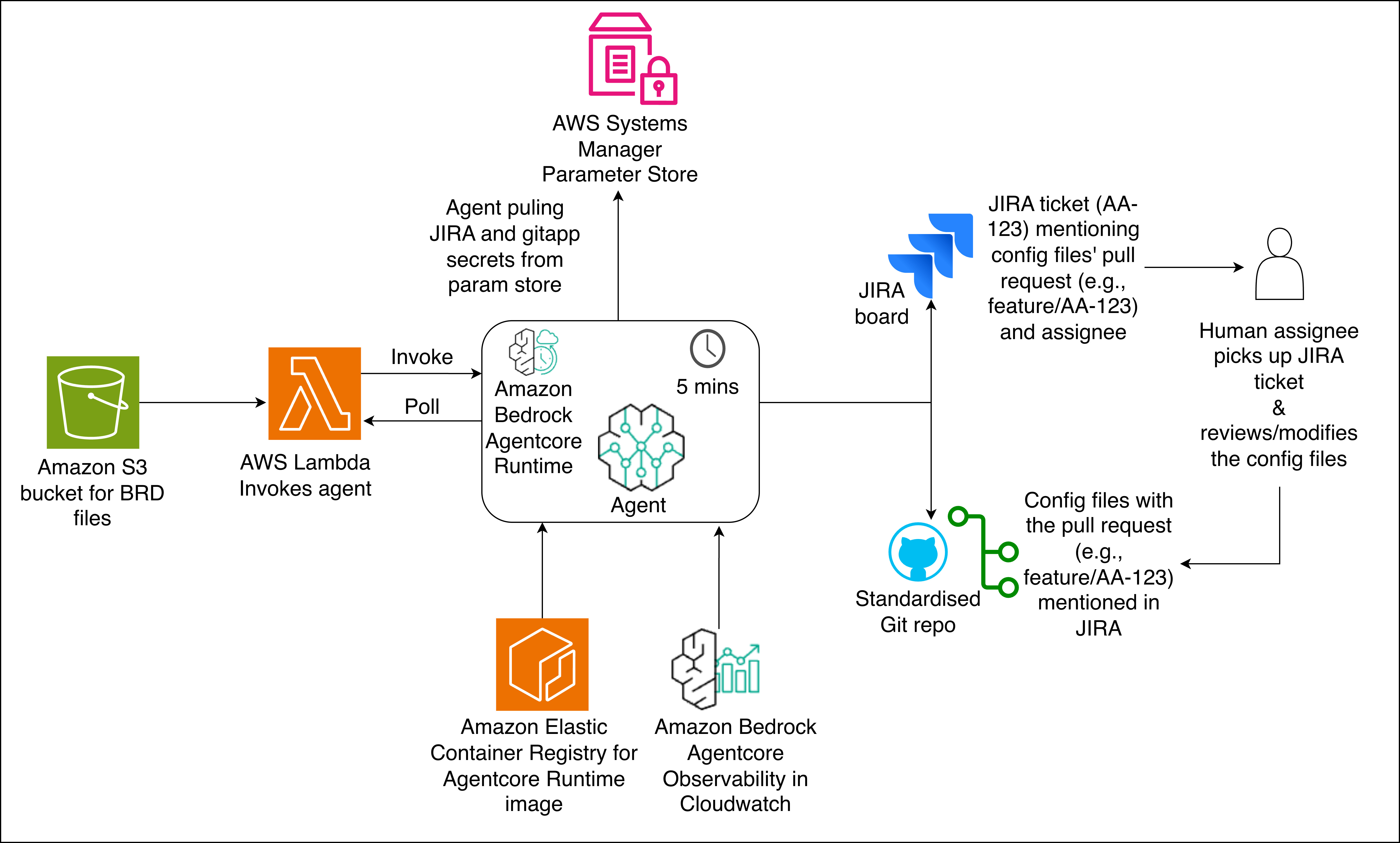
<li>Agentic data source onboarding using Amazon Bedrock AgentCore, hosting agents in its runtime containers.</li>
<li>Automated schema evolution detection and remediation.</li>
<li>Unified data access through Amazon SageMaker Unified Studio.</li>
<li>End-to-end observability with root cause analysis tool (RCA) and context graph.</li>
<li>Automated identification of a failure in obs
分享
阅读原文 ↗