Daily Tech Briefing
AI 科技速览
每天 5 分钟内学习 AI。获取最新的人工智能新闻,理解其重要性,并学习如何将其应用于您的工作。
VentureBeat ML · 2026/8/3 07:00:00
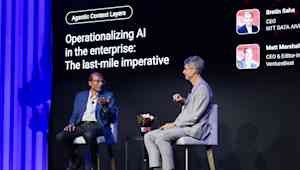
How NTT DATA AIVista closes the last mile of agentic AI for enterprise agents
AI 中文解读
NTT DATA AIVista的高管在大会上点破了企业AI的痛点:光有顶级大模型还不够,关键要把模型"包装"进企业自己的数据和流程里,配上安全防护栏,才能产生真金白银的价值。现在很多企业砸钱搞AI却失败,就因为忽略了这"最后一英里"的整合工作。通俗说,就像买回一台高性能跑车,但要想在你家车库正常开,还得改装适合路况的轮胎、装上导航和限速器。这家公司做的就是专门帮你"改装",利用你公司独有的业务知识、处理规则,甚至老员工脑子里的经验,让AI真正学会处理复杂报表、理赔单这些日常活儿。这么做还能省成本,因为不用频繁大改模型本身。对普通人来说,未来你找保险公司理赔或办业务时,背后AI会更靠谱,不会答非所问,资料填错也能被及时拦住改正,办事效率自然就上来了。
Presented by NTT DATA AIVista At VB Transform 2026, NTT DATA AIVista CEO Bratin Saha joined VentureBeat CEO and editor-in-chief Matt Marshall to discuss the last-mile challenge of operationalizing frontier models in regulated production, where reliability, context, guardrails, and security determine whether AI delivers enterprise value. The conversation centered around the question facing every enterprise now pouring money into AI: how to convert that spending into real, tangible value. "It's not just a model, you're building a system around the model," Saha said. The last mile is the work of wrapping a frontier model in an enterprise's own data, workflows, and guardrails.In the end, regulated production turns on more than just technology, Saha said. Today, most enterprise AI projects fail during implementation because of poor integration, domain specialization gaps, lack of governance, and unclear ownership of outcomes. Last-mile specialization turns a capable foundation model into an enterprise agent shaped by domain-specific workflows, risk appetite, client classifications, regulatory interpretations, and institutional knowledge.Why frontier models stall in enterprise workflowsFrontier models fall well short of production-grade accuracy on many real-world insurance workflows, Saha said, but last-mile specialization can lift them to the reliability enterprises need. Out of the box, those models struggle with the complexity of regulated workflows such as multinational insurance claims."These forms are pretty complex, often have handwriting, lots of checkboxes, and so on," he said, and that complexity is why frontier models like Fable 5, Opus 4.8, and GPT-5.5 fall short out of the box. Saha said the biggest gains come from specializing the entire AI system, not just the foundation model.That system gets specialized with the customer's data, workflow and, in many cases, the tribal knowledge that never made it into an operating procedure document. "The biggest bang for the buck comes from the specialization and then these specialized guardrails," he said.The work has three components: capturing the enterprise’s context and making it consumable by AIrunning an ensemble of models so cost does not go through the roofand adding specialized guardrails that check the model and force a redo when it gets something wrong. What the last mile of agentic AI actually requiresNone of this involves fine-tuning. VentureBeat’s latest enterprise survey found it ranked last among companies’ model-selection priorities.Instead, the last mile centers on domain knowledge and undocumented workflows that companies would never expose publicly without losing their competitive edge."The last mile is about taking data that's proprietary to you and using that to build a system around the model that can steer the model in the right way that can put the appropriate guardrails around it," Saha said. In the end, enterprise AI is about moving a workflow from point A to point B rather than deploying a technology, and NTT's advantage comes from pairing AI experts with subject domain experts. "The only reason is because we go and talk to those human workers and we say, 'How do you actually do the work,'" he said. That expertise is then encoded into an agent. Success in insurance, manufacturing, and other regulated industries relies on three things at once, he added. "You need technology, you need the domain expertise, and you need the change management expertise," he explained, adding that across his team's clients, technology is not the bottleneck.How enterprises turn AI investment into tangible valueFor enterprises weighing large AI budgets, Saha's said the payoff comes not from the model but from the work built around it. "When you're deploying AI in the enterprise, you're not deploying a technology," he said. "You are taking a workflow that exists and taking it from point A to point B." The value is cre
分享
阅读原文 ↗