Daily Tech Briefing
AI 科技速览
每天 5 分钟内学习 AI。获取最新的人工智能新闻,理解其重要性,并学习如何将其应用于您的工作。
Hacker News · 2026/7/31 23:31:28
Read the novels and forget everything else
AI 中文解读
核心亮点:一位文学大师被揭穿身份造假、抛弃家庭,但读者照样买他的书,作品热度不减反增,这背后藏着人们对好故事本身的执着。
通俗解读:就像你一直喜欢的作家突然被曝出真名是别人,编造了童年经历、学历甚至航海经验,还抛妻弃子。但神奇的是,大家并没有因此扔掉他的小说,反而继续追读、讨论、收藏。原因很简单:他写的二十本海洋冒险故事实在太精彩了,精彩到人们愿意把人和作品分开看待。
实际影响:这件事告诉我们,读者真正在乎的或许不是作者有多完美,而是作品能不能打动人心。对我们普通人来说,它提醒我们在评判任何创作时,不妨多关注内容本身的价值,而不是被作者人设带偏。同时,这部作品改编的电影《怒海争锋》近年又火了一把,说明经典故事的生命力远超一时风波,无论创作者私德如何,好作品依然能在几十年后继续影响新读者。
In 1998, Patrick O’Brian had reached the height of literary eminence. During the preceding decade, he had been elected a fellow of the Royal Society of Literature, appointed Commander of the Order of the British Empire (CBE) for services to literature, and received the first Heywood Hill Literary Prize, for “a lifetime’s contribution to the enjoyment of books”—the prize having been presented by the playwright Tom Stoppard, himself a fan. He’d joined the exclusive London club Brooks’s, undertaken two sold-out tours of the United States, earned millions in royalties and become, in the words of editor Starling Lawrence, “a modern-day publishing phenomenon.” The Aubrey-Maturin novels—the twenty-book sequence (one unfinished) chronicling the adventures of Royal Navy captain Jack Aubrey and Stephen Maturin, his ship’s surgeon—were hailed by the critic Richard Snow as “the best historical novels ever written.”
And then it all went bad. The Daily Telegraph, following up on biographical discrepancy in a BBC documentary, uncovered proof that Patrick O’Brian…was not Patrick O’Brian. He had invented huge parts of his own biography, lying about an Irish childhood (he grew up in England), a prolonged exposure to sailing vessels (he had never worked on a ship, perhaps had never been at sea), and the details of his education (he had never attended the Sorbonne, Eton, or Oxford). His name was not Patrick O’Brian, but Patrick Russ. He had changed it in order to sever ties with his first wife, Elizabeth, whom he had abandoned in the 1940s in order to begin an affair with Mary, Countess Tolstoy. In doing so, he had abandoned two small children—one of whom was fatally ill. He was permanently estranged from his surviving son Richard, who, according to Elizabeth, “thoroughly disliked” his controlling and bullying father. He was, she went on, “a violent and erratic man,” whose “passion for culture…overrode all human considerations.”
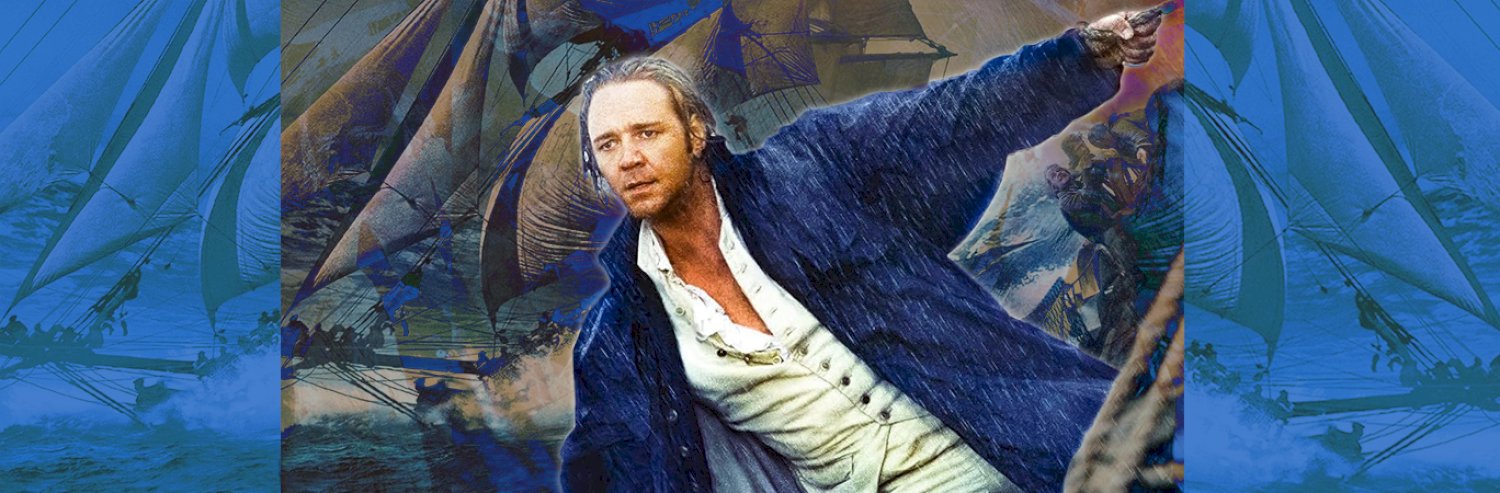
These revelations did not cool the enthusiasm of his readership. His books, all still in print, continue to sell briskly, more than a quarter-century after O’Brian’s death in 2000. Fan clubs dedicated to the Aubrey-Maturin series proliferate; the Reddit community dedicated to the series receives nearly 5,000 views a week. Prices of first editions continue to climb (£1,500 for a complete UK first edition set of all 20 books as of 2024), and each year sees the appearance of new books designed to explain, supplement, or otherwise adorn the series which now forms the core argument for O’Brian’s literary greatness. Recent years have even seen a revival of popular interest in the 2003 film, Master and Commander, based on several of O’Brian’s novels.
If some readers turned against the author—perhaps agreeing with historian Jan Morris’s assessment of O’Brian as “an artificer” whose work lacked the “frisson” one finds “in the presence of creative greatness”—most seemed to go along with John Lanchester’s appraisal that it was “only his family and friends who have a reason to care what he was like,” urging fellow fans “to read the novels and forget everything else.”
The distance between biography and art remains a vexed question; the distance between personality and art, less so. O’Brian himself liked to quote Buffon on the subject—le style c’est l’homme même. In O’Brian’s case, l’homme même had spent decades laboring to distort the facts of his own identity. Such intense effort, so long maintained, involves more than a habit of behavior, becoming something more like a core constituent of identity. Stephen Maturin, the Irish surgeon and spy generally regarded as a stand-in for O’Brian himself, would have agreed. In Desolation Island (1978), the fifth novel in the series, Maturin invokes the costs of a life “spent in dissimulation”—regretting how “the long-lived lie soak[s] into the liar’s deepest fibre.”
It bears remembering that O’Brian had been publishing novels for decades before Jack Aubrey ever paced a quarterdeck. Cribbe
分享
阅读原文 ↗