Daily Tech Briefing
AI 科技速览
每天 5 分钟内学习 AI。获取最新的人工智能新闻,理解其重要性,并学习如何将其应用于您的工作。
VentureBeat ML · 2026/7/29 16:23:49
Target SVP says its real AI moat isn't the models — it's everything built around them
AI 中文解读
核心亮点:Target的高管直言,AI模型的竞争壁垒远不如围绕它们搭建的体系——数据治理、架构设计、持续监测这些“幕后工程”才是真正的护城河。
通俗解读:说白了,现在很多公司都在抢着用AI大模型,但Target觉得模型本身大家都差不多,真正的优势在于你怎么用它。比如,他们不会盲目给所有问题都塞个“AI助手”,而是先想清楚:这个任务真的需要AI吗?如果需要,是让AI全自动还是只当个工具?每个新AI助手出生时权限都很低,得先证明自己能干好,才能慢慢获得更多自由。同时,他们从AI助手“出生”那天起就记录所有行为,万一半夜出问题,能立刻回溯是哪一步出了岔子,全程透明可监控。
实际影响:对普通消费者来说,这意味着你去Target购物时会更少遇到“缺货”或“货不对板”的尴尬。AI会悄悄优化供应链——比如预测某款薯片突然火爆,系统自动补货;或者根据天气变化调整空调的备货量。你看不到这些幕后AI,但它们正让“想要的东西刚好有”变得越来越准。
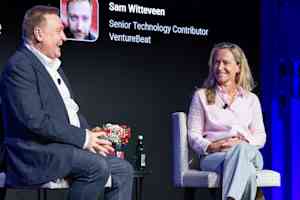
Target SVP Siobhán Mc Feeney says the AI models her company runs aren't what gives Target its edge — everything built around them is."There's a lot in it. That to us is the moat," Mc Feeney said at VB Transform 2026. "The models are great, and they're important. They're just not sufficient to be the competitive advantage."That discipline shows up early in how Target decides whether to build an agent at all. Mc Feeney was blunt, even "controversial" by her own admission, about the current AI moment: every enterprise wants AI agents, but not everything needs one, she said.Agents earn their autonomy over time rather than getting it by default, she said — a principle that runs through everything Target has built around them.Mc Feeney said the goal is to make sure agents are aimed at the problems that drive the most value for Target's guests. “We want to make sure we're investing in the right places," she said.Being deliberate about agentsAgents are becoming part of Target's underlying architecture, increasingly connecting signals, systems, and decisions across supply chain, replenishment, and demand forecasting.Mc Feeney framed it as retail's oldest promise — the right product, in the right place, at the right time — delivered at scale.But her team has been deliberate about building AI agents, beginning with the simplest, most obvious question: What is the problem they’re trying to solve? This leads to several follow-on questions: Does that problem need an agent? If it does, what type of agent? An orchestrator? A super agent? A domain-specific agent? Or is what you're calling an "agent" actually just a tool?“You define that upfront, and this may sound a little process-heavy, then you have to register and certify your agent,” Mc Feeney said. Because a solution may already exist, and you don’t want to duplicate work. Agent design kicks off another series of important questions: What triggers an agent to act? Automation? An engineer? A timer? What needs to be put in place to track that? "We're trying to make sure we have lineage from the very beginning — the birthing of this agent, all the way through — because at 2 a.m. one morning, when something goes sideways, we want to make sure we understand everything that happened," Mc Feeney said.Autonomy level is another consideration; new agents typically start with base autonomy and earn more over time. What the agent has access to is a separate question: what data, what systems, what tables, what databases?Finally, there’s monitoring and observability; agents won’t solve problems, or improve over time, if they’re not continuously evaluated. “We measure everything: What it was intended to do, its calibration, its trajectory, not just runtime and latency,” Mc Feeney said. This creates full transparency, and allows agents to be tweaked over time. “You're talking about architecture and taxonomy and a data governance layer that absolutely had to be established,” she said. There's a lot in these "layers of autonomy" — that foundation is what gives Target the ability to scale and properly invest in the right models for the right problem.Models have different “gradients” that are better for different jobs; for instance, frontier models excel at complex tasks that require crunching billions of pieces of data (like in heavy merchandising supply chains). But in some scenarios they can be cost-prohibitive. “So it’s making sure there's always a cost benefit,” Mc Feeney said. Agents must earn their autonomyA digital-twin simulation predicted men's shorts inventory across three Target stores in Long Beach this summer — and one store came back needing six to seven times more stock than the others, she said. Inventory analysts' first reaction: That can't be right. But the system had found something they hadn't factored in. That store sat less than two miles from the beach; the other two were 10 to 12 miles inland. Analy
分享
阅读原文 ↗