Daily Tech Briefing
AI 科技速览
每天 5 分钟内学习 AI。获取最新的人工智能新闻,理解其重要性,并学习如何将其应用于您的工作。
Hacker News · 2026/7/29 18:28:51
Turning a dumb AC unit smart (without losing my security deposit)
AI 中文解读
核心亮点:一个程序员用15美元成本,把老式旋钮空调改造成了智能家居,再也不用起身去手动调节温度了。
通俗解读:公寓里的空调只有老式旋钮,没有遥控器也没有智能功能。作者买了一个步进电机(像小马达)、一块ESP32开发板(类似微型电脑芯片)和几块钱的五金件,用纸板、回形针和L型铁片固定住,让电机能拧动旋钮。然后通过无线网络连接家里的温度传感器和Home Assistant智能中枢,空调就能根据室温自动开关。整个过程虽然看起来像“废品站拼凑”,但确实管用。
实际影响:对租房族来说,这是个福音。不用大改装修、不用求房东,花十几块钱和几小时动手就能让老旧家电变智能。虽然稳定性不如成品,但普通人完全可以自己复制这套方法,实现手机远程控制、定时开关、自动温控等功能,彻底告别“爬下沙发去拧旋钮”的烦恼。
TL;DR: DIY home automation is ezpz with nothing more than a stepper motor, an esp32, and a high tolerance for Jank.
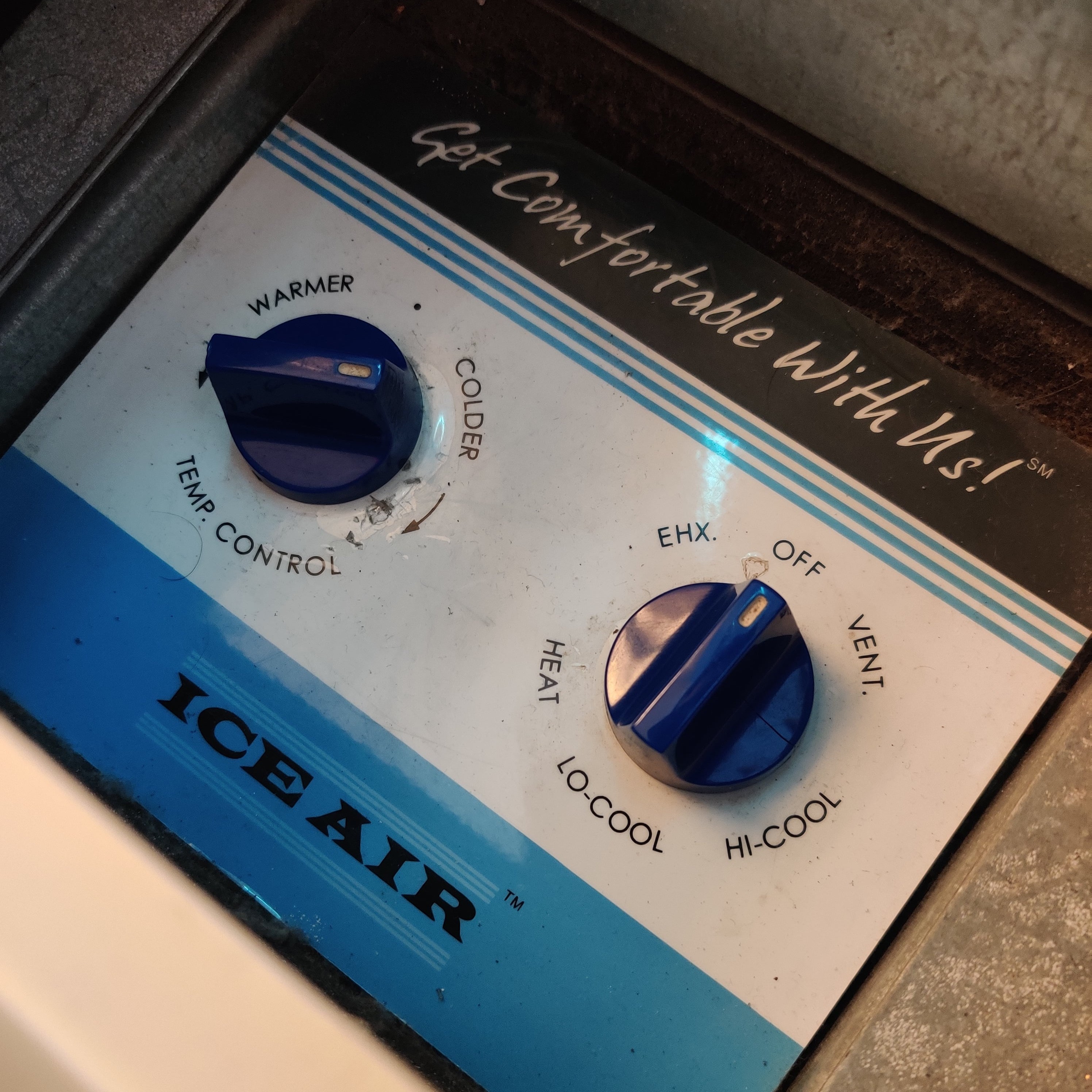
My rental apartment’s AC unit can only be controlled using these retro-looking analog knob-based controls, mounted right onto the unit. No separate wall-mounted thermostat, no remote control… nothin’ fancy whatsoever.
These knobs work… but having to constantly stand up and fiddle with them gets annoying pretty quick.
Fortunately, there’s an ‘ol Prilik family saying that goes something like this: “remember son - the hardest problems in life can usually be solved with nothing more than a stepper motor, an esp32, and a dream”1
And sure enough, after dropping ~$15 on parts, waiting for things to arrive from China, and spending a few hours iterating on the hardware assembly and firmware… I hacked together this beautiful mess:
What you’re looking at here is a jerry-rigged esp32-controlled stepper motor, coupled to one of my AC unit’s knobs using a shaft coupler, all affixed to the AC’s back-plane using a cheap L-bracket and a binder clip (with some industrial-grade cardboard padding for good measure).
This whole MacGyver’d up contraption talks to my Home Assistant instance over MQTT, which turns the AC unit on/off based on the state of a temperature sensor located in the same room.
Et voila 🪄 ✨
Just like that - I’ve managed to free myself from the shackles of having to get up off the couch just to tweak my AC!
For all you professional embedded and mechatronics folks out there: I strongly suggest you stop reading here.
The rest of this blog post is a walkthrough of a software engineer’s approach to home automation and building custom hardware, and let me tell you: both the final product, and the journey to get there, are hella jank.
That said… if you’re not afraid of a bit of jank: read onwards, and join me on this fun foray into how I managed to hack together some totally bespoke home-automation hardware with almost no budget, or experience!
🗽 Setting the stage⌗
In April 2025, I moved to New York City. After a brief apartment hunt, I managed to find a place I’m pretty happy with: the location is convenient, the building is fairly modern, and the rent is an absolute steal. There’s not much to complain about!
…well, except for the AC situation.
See, for whatever reason, developers in NYC really like using these loud, power-hungry, wall-mounted PTAC units in their apartment buildings. Some buildings might spend a bit extra in order to wire these units up to wall-mounted thermostats… but oftentimes, they’ll just go with the cheapest option: completely analog, unit-mounted knobs.
Here’s a picture of what I’m talking about:
Yeah - guess which option my building went with 🙃
🤔 What are my options here?⌗
Like any good renter, the first thing I did was gently ask my landlord if there was any way to “upgrade” the controls to something a bit more… modern. As expected, the response was roughly along the lines of “lol no, why would we do that?”, which, to be fair, was basically the response I expected.
Well, no matter, like any good engineer - surely I can hack my way out of this pickle?
After a bit of finessing, I managed to pop the cover off the unit, and expose its soft underbelly inner workings. Much to my surprise, not only did I find some info about the unit, but even a whole wiring diagram!
Now, I’m no expert when it comes to wiring diagrams, but by following the wiring, it certainly seems like this entire circuit is operating at line voltage, with nary a low-voltage digital signal I can hook into in sight.
⏺️ Smart Relays?⌗
Ok, maybe I can just splice in a smart relay somewhere? I’m no electrician, but it’s probably not that hard, right?
Well, maybe?
But honestly, I didn’t think this was gonna be a viable route for me.
Setting aside the fact that working with line voltage and HVAC equipment is a bit “spooky” for someone with zero electrical wiring experience (and that my landlord probably wouldn’t be
分享
阅读原文 ↗