Daily Tech Briefing
AI 科技速览
每天 5 分钟内学习 AI。获取最新的人工智能新闻,理解其重要性,并学习如何将其应用于您的工作。
VentureBeat ML · 2026/7/28 19:32:34
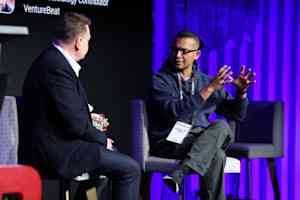
Instacart's CTO says AI made the company stop worrying about tech debt
AI 中文解读
Instacart首席技术官抛出惊人观点:AI让公司再也不怕“技术债”了,因为97%的代码现在都由AI生成,工程师几乎不再需要自己写代码。
通俗来说,过去程序员要把大量精力花在写重复的、枯燥的代码上,就像每天抄写同样的句子。现在AI接手了这些“体力活”,工程师只需要思考业务逻辑和处理疑难杂症。就连系统出故障了,AI也能根据公司过去几年的故障记录自动诊断修复,准确率从60%飙升到90%以上。剩下的3%麻烦事,比如老系统、合规要求或需要极低延迟的场景,才需要人类亲自出手。
对普通人来说,这意味着Instacart的购物体验会更稳定——你看网页或App时,幕后代码可能已经重写了无数次,但界面却更流畅、bug更少。同时,新功能上线速度也会加快,因为开发团队不再被“技术债”拖累。不过这也引发新问题:当AI自己写代码、自己修bug时,人类工程师的角色正在从“码农”转向“提问者”和“把关者”,未来的工作方式将彻底改变。
Instacart is posing the provocative question: What if most of the work your engineers do today should, in fact, be done by machines?At VB Transform 2026, CTO Anirban Kundu argued that dev teams continue to waste their time on draining, repetitive, high-volume work; this should be absorbed by AI agents so that humans can focus on problems that require judgment, intent, and exception handling. In fact, in 97% of cases, Instacart’s builders don’t even read code anymore. “In the past, the tactical level was the creation of the code,” Kundu said. “In the most tactical level going forward, it's going to be, ‘How do you navigate around the AI system to give you what you want?’”AI generating code, performing "pretty serious evals" That doesn’t mean humans never look at code; agents handle the bulk of code generation and boilerplate, particularly with newer projects where code is generated or regenerated on a weekly basis. “The benefit of that is we don't care about tech debt anymore,” Kundu said. “Things that are not active just get dropped out and then it gets rebuilt, kind of like how we used to build assembly code or object code.”So why not 100%? The remaining 3% is in legacy, compliance, and latency-sensitive systems and workflows, or driven by a “boatload of code” that is dead, not active, or half-active. These cases still need careful human attention. Instacart is slowly “smoothing those parts out,” however, breaking systems down in an aptly-named project Atoms, then building them back up in a cleaner, more modular form. Kundu’s team started with the “monoliths” and is shifting to remote procedure call (RPC)-driven architectures. But evaluation remains one of the overarching challenges. Code reviews aren’t as relevant when AI is generating code — as Kundu noted, “the lines of code are going to be correct, the syntax is going to meet your expectations” — so the goal is to move to an “intent model.” That is, training devs so they can ask different models the right questions from an intent perspective. Evals are then performed independently: Roughly 7,000 automatic evaluations run each month, and the system answers 8,000-plus real-time developer queries with about 99.9% accuracy.Identifying "hiccups" that human intuition might have missedDovetailing with this, Instacart has built an agentic site reliability engineering (SRE) system trained on years of the company’s own incidents and root-cause analyses rather than generic failure data. Instead of teaching a model how production outages work in the abstract, the team fed it the specific ways Instacart’s systems have broken over time, along with the ways humans diagnosed and fixed them.As a result, the company has seen accuracy in detecting and mitigating production issues jump from roughly 60 to more than 90%. Kundu pointed to one example with Instacart’s internal tool Blueberry. The AI SRE colleague watches 200-some-odd Slack channels, monitors signals, and looks for patterns across human conversations and alerts. In one incident, a database shard backed by an EBS volume that had a “hiccup” for a period of time. The human team did not immediately suspect AWS disk issues and were “obviously scrambling” to figure out why this particular shard misbehaved. But about 20 minutes in, Blueberry posted on Slack, pointing to a specific blip and tying it to a feature-flag-like system called "roulette" that had been inadequate. "It's supposed to be rolling out in this cadence, [but] it had been too much,” Kundu said.Blueberry figured it out, and the team resolved the incident. “Would have a human been as quick? I think the problem is human intuition would hold us back a little bit,” Kundu said. Humans tend to default to patterns we’ve seen before, then resort to debugging; Kundu called this the “first brain-second brain kind of thing.” But Instacart’s agentic SRE is actually “more comprehensive in its ability to look at everything and then be able to decide what does or doesn&#x
分享
阅读原文 ↗