Daily Tech Briefing
AI 科技速览
每天 5 分钟内学习 AI。获取最新的人工智能新闻,理解其重要性,并学习如何将其应用于您的工作。
VentureBeat ML · 2026/7/28 22:10:02
Visa used Mythos to hunt for bugs in its own payment network, then open-sourced the harness that made it possible
AI 中文解读
Visa最近干了一件挺酷的事:它请来Anthropic公司的AI模型Mythos,给自己每天处理数十亿笔交易的全球支付网络做了一次彻底的安全体检。这个网络连接着近50亿张银行卡和1.75亿家商户,覆盖200多个国家和地区,而AI能从系统最底层找出那些单个不起眼、组合起来却很危险的漏洞,就像侦探把零碎线索串成完整的作案链条。更难得的是,Visa把这次检查用的整套工具都公开了,任何人都能拿来用、改、学。
通俗点说,Visa就像是请了一位AI版“安全侦探”,把自己庞大的支付系统里里外外翻了个遍,连最隐秘的角落都没放过。以前这种深度检查通常要到后期渗透测试才能发现问题,现在AI提前就把隐患揪了出来。Visa还把侦破方法写成操作手册,免费分享给全行业。
对我们普通人来说,这意味着银行卡和在线支付变得更安全了。AI能比人类更快发现漏洞,Visa零信任架构又确保即使有漏洞也不至于被利用。更关键的是,这套工具开源后,其他金融机构、甚至政府系统都能用上,整个网络世界的安全防线都会因此提升。以后你刷信用卡、用支付宝,背后可能就藏着AI保镖在默默巡逻。
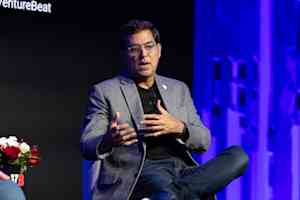
Visa aimed Anthropic's Claude Mythos at the infrastructure behind billions of daily transactions, a network that spans more than 200 countries and territories, moves money in roughly 160 currencies, and connects nearly 5 billion payment credentials to more than 175 million merchant locations. The model stitched minor weaknesses deep in the stack into working exploit chains that would traditionally have surfaced only late in penetration testing. Rajat Taneja, Visa's president of technology, walked the VB Transform 2026 audience through what came next, including why Visa released the harness that governed the entire hunt as open source and why the company abandoned traditional remediation metrics for a measurement its team invented.Taneja has run technology strategy, product engineering, and global infrastructure at Visa since 2019, after joining the company in 2013 from Electronic Arts, where he served as CTO following 15 years at Microsoft. He co-authored, with Visa chief information security officer Subra Kumaraswamy, the June 10 blog post announcing the release of the Visa Vulnerability Agentic Harness on GitHub as a reference implementation that any security team can inspect, adapt, and extend. Visa also published a technical white paper detailing the architecture, lessons learned, and 12 non-negotiable architectural practices for critical infrastructure.Trust built on pessimism and paranoiaTaneja led with the arithmetic that makes Visa a target worth defending obsessively. Trust at the scale of global payments gets engineered through what he called pessimism and paranoia, by assuming failure and designing around it before failure arrives. The network has been hardened over many years through zero-trust architecture, layered defenses, and highly automated security operations built for the scale and reliability global payments demand.So when Anthropic invited the organizations behind critical software to test Mythos under Project Glasswing, Visa said yes. Glasswing participants collectively identified more than 10,000 high- or critical-severity vulnerabilities in the first month of testing across software underpinning critical systems industry-wide, according to Anthropic. Anthropic's own conclusion placed the bottleneck after discovery, in verification, disclosure, and patching speed. Visa joined to test decades of hardening at AI speed and learn where advanced models could push its defenses further.What Mythos showed at VisaInside Visa's environment, Mythos demonstrated system-wide, context-aware analysis, surfacing vulnerabilities buried deep in the stack and flagging issues that grow more serious when chained together, with findings clean enough that engineering teams could act on them without wading through noise. Some findings carried critical severity ratings, and Visa credits its zero-trust controls, network segmentation, and layered safeguards with breaking the chain before any external actor could have acted.That confirmation mattered, Taneja said, but the epiphany that followed mattered more. "In a world of agentic attacks, defense also has to be agentic," he said. Even at a company that has invested decades in defense-in-depth, the model revealed assumptions the team had been operating under that needed rethinking. Traditional SAST tools keep their place as a first pass against known vulnerability patterns, Visa's white paper notes, but pattern matching alone cannot follow an adversary who reasons through logic, data flow, and the exploit chains that live between the signatures.A harness, not a scannerVisa's response was not another monolithic scanner. The team built the Visa Vulnerability Agentic Harness, now in its fifth generation, as a governed pipeline that directs frontier AI models through structured security tasks while enforcing deterministic controls, policy gates, and human oversight at every stage. Taneja walked through the design philosophy. The harness operates across f
分享
阅读原文 ↗