Daily Tech Briefing
AI 科技速览
每天 5 分钟内学习 AI。获取最新的人工智能新闻,理解其重要性,并学习如何将其应用于您的工作。
VentureBeat ML · 2026/7/27 17:25:30
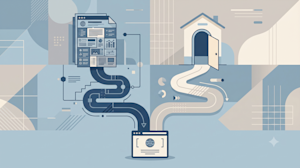
AI cites the deep pages but sends humans to the homepage — most sites are built backward
AI 中文解读
AI搜索正在重塑互联网的流量规则,一个关键变化是:AI引用网页深层内容,却只把用户引到首页。数据显示,当谷歌显示AI摘要时,用户点击传统结果的概率从15%降到8%,而点击AI答案内链接的概率仅1%。这导致大量网站流量暴跌,小型出版商两年内失去约60%搜索推荐流量。
通俗地说,以前人们搜“如何做红烧肉”,搜索引擎会列出菜谱网站的链接,用户点进去看;现在AI直接总结出步骤,用户不再需要点击网页,网站因此损失大量访问。然而,AI系统本身却在疯狂“吞食”网页内容来生成答案,ChatGPT引用实时网页的比例半年增长五倍。这形成了一个怪圈:AI依赖网站内容生存,但其存在又让网站失去点击收入,威胁整个开放网络的基础。
对普通人而言,未来搜索会更快得到答案,但你可能会错过更丰富的原网页信息。对内容创作者和中小企业来说,单纯靠广告和流量变现的模式已岌岌可危,他们需要思考如何在AI时代找到新的价值交换方式,比如品牌露出、订阅或服务转化。
If your business depends on people clicking through to web pages, the last two years have been brutal. Pew Research Center tracked the browsing behavior of 900 U.S. adults and found that when Google shows an AI summary, users click a traditional result just 8% of the time, roughly half the 15% rate when no summary appears. Links cited inside the AI answers themselves fare worse: users click on them only about 1% of the time.This has had a huge impact on publishers. Chartbeat data reported by Axios shows page views from Google Search fell 34% across its publisher network between December 2024 and December 2025, and small publishers have lost roughly 60% of their search referral traffic over two years. Business Insider's organic search traffic dropped 55% over three years, and some smaller publishers have already shut down. Chatbot referrals, meanwhile, still account for less than 1% of publisher page views despite growing more than 200% in a year.The story in publisher circles has been simple: AI is killing the web. But recent developments show the reality is more nuanced.Machines are reading more than everSimilarweb's 2026 Generative AI Landscape report reveals that while AI platforms send fewer humans to web pages relative to the answers they generate, the AI systems themselves are consuming the web at an accelerating rate in the form of searching the web on the user’s behalf to answer their questions. The share of ChatGPT answers containing live web citations grew more than fivefold in under a year, reaching 6.8% of all answers by May 2026. In some categories like travel, it is as high as 22.6%.Every major AI search product fetches live pages from search indexes and synthesizes answers from them, which means the quality of AI answers depends directly on the health of the content layer underneath. As Lily Ray, VP of SEO and AI search at Amsive, puts it in the Similarweb report, if your organic visibility dips, your AI search visibility follows, because the models are less likely to find your content.This has created a troublesome feedback loop. AI answers are built on an information supply chain whose funding model, ad-supported clicks, is collapsing primarily because of AI answers. A critical question for the continued viability of the open web is whether some alternative business model will work, and what the model will be.The replacement economy is forming inside the chatThere is some early data showing where things may be going. Following ChatGPT's May 7 search update, which surfaced prominent clickable brand links inside answers, referral traffic from ChatGPT surged by 157% in a week. But the shape of that traffic changed: the share of referrals landing on homepages more than doubled, from roughly 25% to nearly 60%.Traditional search sent users to specific articles and deep pages tied to specific queries. AI referrals increasingly deliver a pre-informed visitor to a brand's front door. The chatbot does the researching and comparing; the human arrives ready to act. Similarweb's data shows AI-recommended brands receive two to four times as many subsequent visits as competitors that were not recommended.Money follows the behavior. Sponsored results appeared in 26% of U.S. desktop ChatGPT conversations in June 2026, up from 14% just a month earlier, per Similarweb's ad intelligence data. Two-thirds of those ads appear after the second prompt, targeted on conversation context rather than a keyword. Click-through sits around 0.50%.The traditional search engine keyword auction is being replaced by something new: paid placement inside a conversation, targeted on accumulated context. That is a direct challenge to the auction Google has run, and dominated, for two decades.Google's monopoly meets a new competitorGoogle is not a bystander here; it is simultaneously the incumbent being disrupted and one of the largest players in the disruption. AI Overviews now appear in a growing share of Google se
分享
阅读原文 ↗