Daily Tech Briefing
AI 科技速览
每天 5 分钟内学习 AI。获取最新的人工智能新闻,理解其重要性,并学习如何将其应用于您的工作。
SiliconANGLE AI · 2026/7/22 02:12:16
Nvidia Vera Rubin: Inside the agentic AI factory that rewrites the CPU playbook
AI 中文解读
Nvidia这次发布Vera Rubin平台,最吸引人的地方不是又推出一款AI硬件,而是彻底颠覆了CPU的设计思路。以前CPU的路线图主要跟着云计算走,堆核心、降成本就行。但现在AI代理(Agentic AI)兴起,情况变了:GPU负责“思考”,CPU却要来回忙活——调用工具、执行代码、处理数据,这些任务对单个线程的性能、内存带宽和延迟要求极高,多堆几个普通核心根本没用。Nvidia专门设计了一颗新CPU来应对这种“推理-行动-观察-再推理”的循环。这样一来,AI代理的运算效率会大幅提升,比如未来你用智能助手订机票、查资料、写报告,它调用各种工具和数据库的响应会快得多,而且企业的AI部署成本也可能降低。最终,这种“AI工厂”设计的普及,会让更多人用上更聪明、更流畅的AI应用。
UPDATED 22:12 EDT / JULY 21 2026
INFRA
Nvidia Vera Rubin: Inside the agentic AI factory that rewrites the CPU playbook
ANALYSIS by
Zeus Kerravala
On the surface, this week’s Vera Rubin launch is another major platform moment for Nvidia Corp., as the company maintains a steady drumbeat of artificial intelligence infrastructure innovation.
Nvidia is positioning Vera Rubin as a full-stack system designed to improve performance per watt and reduce token costs, with production ramping across a broad global partner base, including cloud and AI infrastructure providers. Nvidia says the platform spans seven co-designed chips, integrates new networking and is already being deployed by partners such as CoreWeave, Google Cloud, Microsoft Azure and Oracle Cloud Infrastructure.
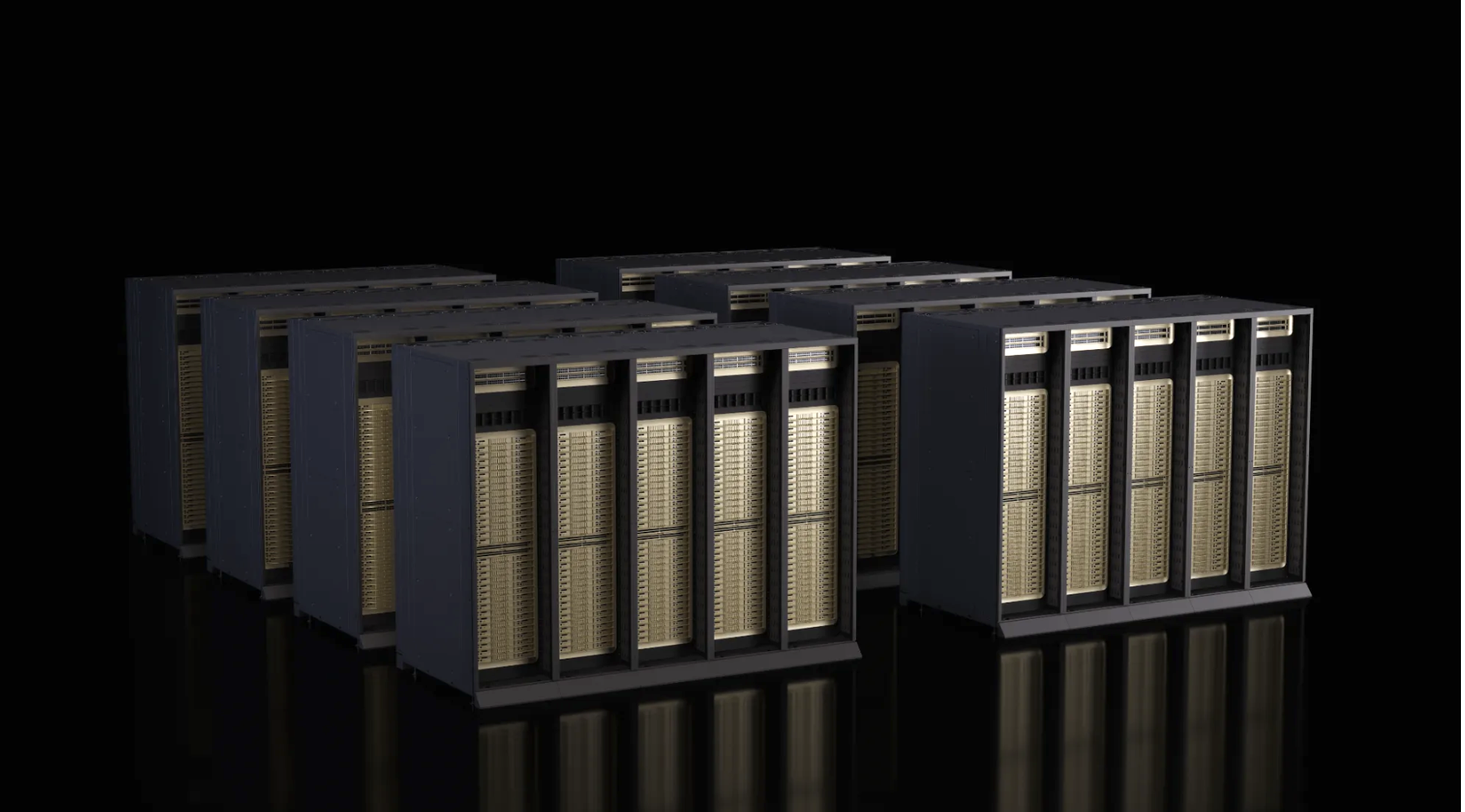
However, the bigger story isn’t that Nvidia launched another AI system, since that’s nothing new for the king of AI. Rather, it’s that the company is making an aggressive case that the AI era, especially the rise of agentic AI, requires rethinking the central processing unit, the network and the system architecture as a single, interdependent design problem rather than a pile of best-of-breed parts. That is why Vera (pictured) matters.
From cloud economics to agentic bottlenecks
For years, the CPU roadmap in the data center was largely shaped by cloud economics. Hyperscalers wanted more cores, higher throughput and lower costs, which rewarded chiplet-heavy designs optimized for scale-out efficiency. Nvidia’s analyst briefing, and another for reporters last week, framed that era as one in which core counts grew roughly nine time and single-thread performance gains doubled, leaving the market with processors well-suited for classic cloud workloads but less suited to the latency-sensitive, branch-heavy behavior of AI agents. As Nvidia’s Hannah Coutand explained in the briefing, “AI is asking for a new CPU,” because “agentic AI is putting CPU back on the critical path.”
That framing is important. In an agentic system, the graphics processing unit performs the reasoning, while the CPU is constantly in the loop, handling tool calls, code execution, queries, orchestration and data handling between reasoning steps. These workloads create continuous loops of reasoning, acting, observing and evaluating, which put simultaneous pressure on single-thread performance, memory bandwidth, latency and scaling efficiency. In other words, throwing more generic cores at the problem is not enough if the real bottleneck is the sequential work between GPU inference passes.
Inside Vera: A CPU designed for the AI loop
This is the central rationale behind Vera’s new CPU architecture. Rather than extending the conventional server CPU playbook, Nvidia built a custom Arm-based processor around its new Olympus core. Vera features 88 custom cores, 176 hardware threads, up to 1.2 terabits per second of LPDDR5X memory bandwidth, 164 megabytes of unified L3 cache, and up to 1.8 TB/s of coherent CPU-GPU bandwidth via NVLink-C2C.
Nvidia says the design target is what it calls the “max single-threaded CPU at scale,” meaning a processor that preserves strong per-core responsiveness while still scaling across highly concurrent agent workloads. The analyst briefing made the design intent unusually clear. Coutand stated that Nvidia “didn’t set out to go win CPUs,” but instead recognized that “the CPU was becoming a bottleneck in the AI factory” and designed a better processor to improve “AI factory economics.” That is classic Nvidia strategy: Start with the system bottleneck, then build the silicon needed to remove it.
Nvidia’s Ian Finder provided the technical details behind that claim. He d
分享
阅读原文 ↗